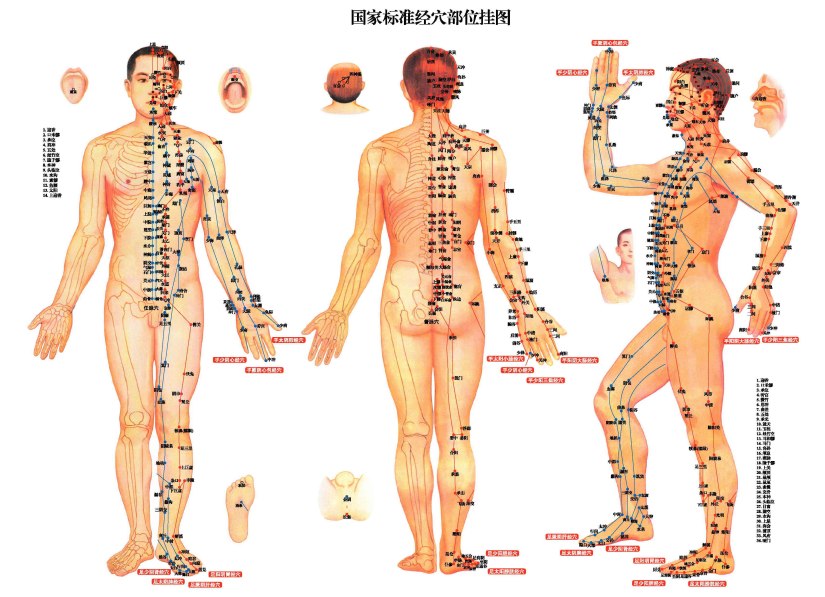
Sifu Wing Cheung writes: “Think of meridians like garden hoses. If they are not laid out properly, when you turn on the tap, the water won’t flow smoothly. That’s why we first adjust the posture so the qi can flow smoothly, just as we properly lay out the garden hoses before turning on the tap.” https://taichi18.com
In Qigong and Taiji, we begin out practice in Wuji stance. It is a specific way of standing that both aligns the skeletal system and relaxes the muscles; it is an “empty stance” that unkinks our energetic knots. The traditional mantra for aligning in wuji stance is:
- Strong the Bone
- Hollow the Chest
- Sink the Qi
- Relax the Mind
Lao Zi refers to wuji stance in chapter 3 of the Tao Te Ching “… the governance of the Sages [works by] emptying their minds, filling their bellies, weakening their aspirations, strengthening their bones…” *
“Strong the Bone” refers to aligning the body. Absolutely key is to begin with both feet shoulder’s width apart, with toes pointed forward and parallel. My Chen style instructor, Ron Nigro, would then say “Knees over ankles. hips over knees, shoulders over hips, ears over shoulders”, with both sides of the body parallel to each other, like the rungs on a ladder. Your head should feel as if it is being pulled up to the heavens on a string, from a point near the top of the head called the “bai hui” (where the soft spot is on an infant’s head). Bai Hui translates to “hundred meetings”, because so many meridians cross here. Sifu Cheung explains this posture in detail in his Qigong Mode and Tai Chi Posture Requirements Course 1. https://studio.youtube.com/video/T6r5N5UCCEk/edit
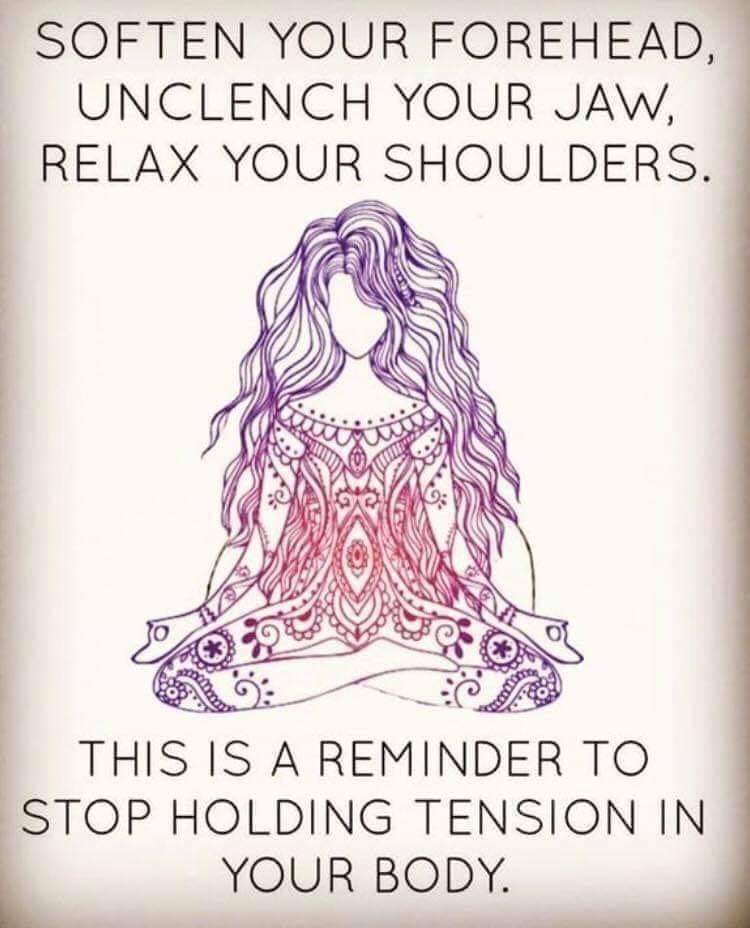
“Hollow the chest” refers to relaxing the shoulders and being aware of not sticking your chest out, nor standing with rounded shoulders. I discussed relaxation in my last post, “Getting started: Relaxation” https://wordpress.com/post/sagewise.org/202
“Sink the Qi” is about putting you attention at your lower dan tian, which is deep inside the body just below the navel. In Qigong we say “qi follows yi”, which translates to “intention follows attention”, which is the same as “where mind flows, energy goes”. Because we are channelling energy when we practice Reiki, we want to have a firm connection with the earth. The lower dan tian is the seat of our groundedness; in qi gong and taiji practice it is where we move our bodies from. *Note: There are three dan tians, more on these on another post.
“Relax the mind” or “calm the mind” is to let go of the worries of the day. The best way to accomplish this is to pay attention to your breathing. In taiji and qi gong we breathe through the nose, never the mouth. Long, slow, deep, and silent breathes. The entire lower abdomen should expand on the inhale, not just the stomach, but to the back and sides as well. More on breath in the next post.
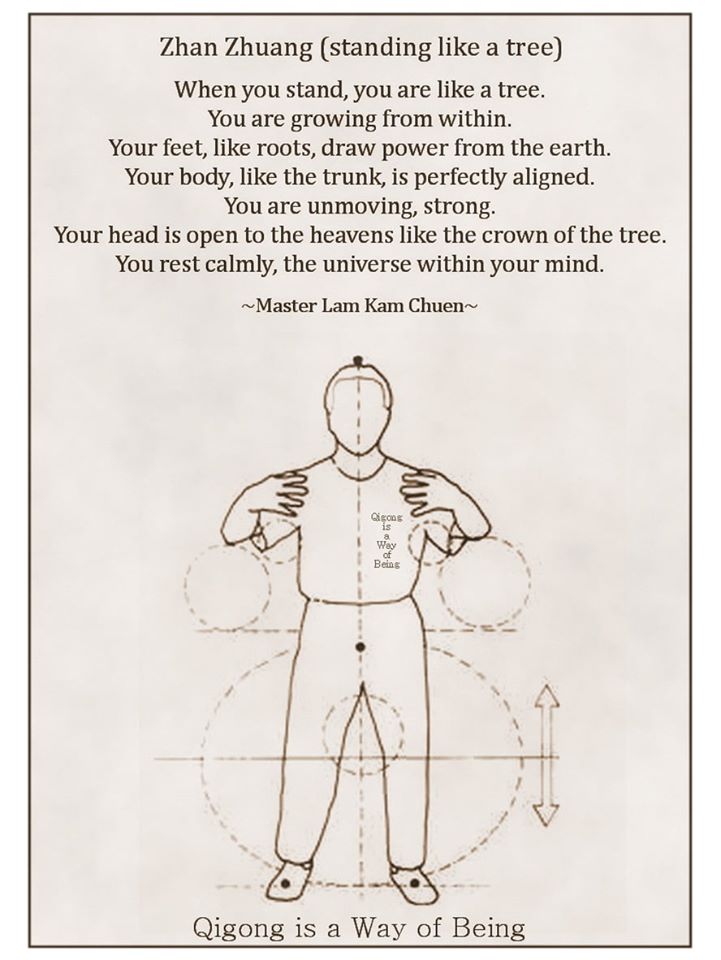
Once you are in a relaxed wuji stance the next practice is Zhan zhaung. Zhan zhaung (pronounced “john jong”) can be translated as “stand like a tree”. A tree being alive pulls down celestial qi from the heavens, and pulls up earth qi through its roots. Master Lam Kan Cheun explains the full routine, but the second stance is the only one necessary to practice. https://studio.youtube.com/video/BV3nFof3Ei4/edit
Keep focusing on your breath as you practice zhan zhaung. At first you may only be able to remain in this pose for 5 minutes, but eventually you will be able to extend that time, and add a second practice within it ; the microcosmic orbit, which will increase your ability to feel qi. That’s a topic for another post.
*See Dr Yang, Jwing-Ming’s Dao De Jing: A Qigong Interpretation about how the Tao Te Ching can be read not only as spiritual and moral guidance, but as a treastise on the practice of qi gong.
 Sage Wise Arts
You must be logged in to post a comment.